
Video shows sea turtle nesting on the sand in Seal Beach, a West Coast first
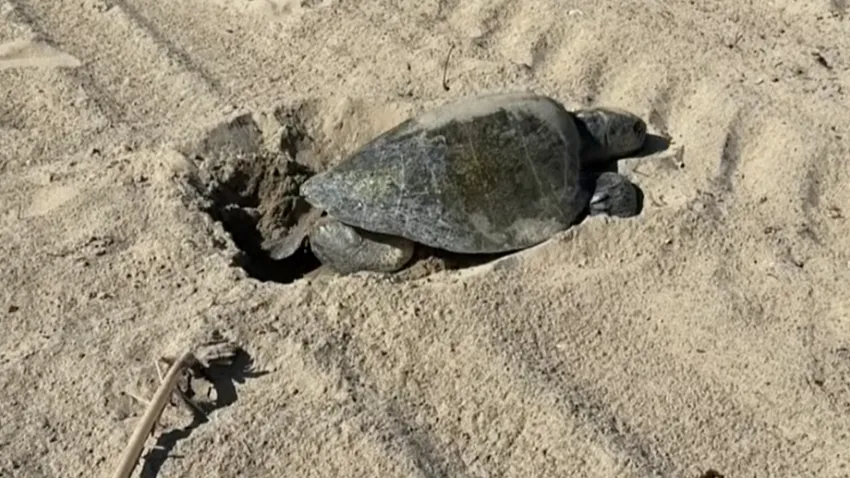
Video shows the first-ever natural nesting on record of a sea turtle on the U.S. West Coast, according to the National Oceanic and Atmospheric Administration.
The olive ridley sea turtle was seen in video recorded by the Huntington Beach Fire Department on Sept. 16 digging a nest and laying eggs near Seal Beach, NOAA Fisheries West Coast said in a social media post.
Three days later, a sea turtle was seen on a beach a few miles south. The agency said it is not clear whether it was the same turtle seen in Seal Beach.
A NOAA team and partners plan to monitor the two nest sites during incubation, which typically lasts about 45 to 60 days. Both areas are fenced off and beach visitors were asked to stay away from the area.
Sea turtles are protected under the Endangered Species Act.
The olive ridley is the smallest sea turtle species. They usually grow to weight 100 pounds and are about 2.5 to 3 feet long. A typical lifespan is 30 to 50 years. They are found around the world, but usually in the tropical waters of he Pacific, Indian, and Atlantic oceans.
Nesting areas can be found in Mexico, Nicaragua, Costa Rica, and Panama.
“While occasionally seen in Southern California following warm currents, this species has never been documented to nest in the United States,” NOAA said in its post.
The turtle gets its name from the olive green color of its shell, which is shaped like a heart. The species has two nesting strategies — solitary or arribada, which refers to synchronized mass nesting of thousands, sometimes tens of thousands, of olive ridley turtles.
At one point, an estimated 10 million members of the species were in the Pacific Ocean. Now, there are a handful of beaches that are home to mass nestings.The species’ most significant threats include bycatch in fishing gear and the harvesting of turtles and eggs.
Some advice from NOAA:
- Keep your distance. Give nesting sites plenty of space, and don’t disturb the fencing or signage.
- Spot a sea turtle? The public can play an important role in protecting turtles and helping our experts by reporting sightings.
- Found a stranded sea turtle? Call the NOAA Fisheries West Coast Stranding Hotline at (562) 506-4315.